A better trip starts before the engine does. Check the fit, give your pet time to get familiar with their travel setup, and pack around the journey rather than just the destination.
Start with the space your pet will actually use
It is easy to think about the whole back seat. Your pet only experiences the small area immediately around them.
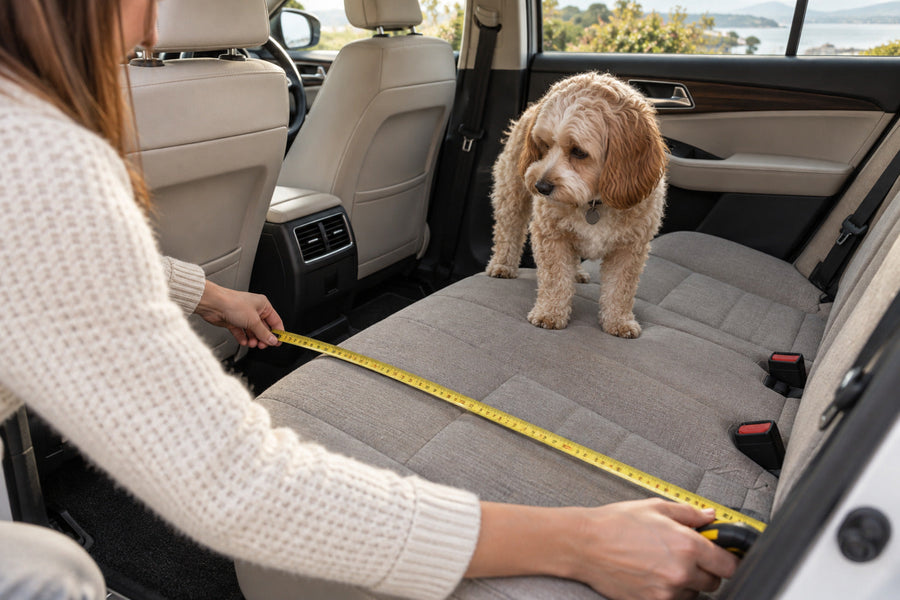
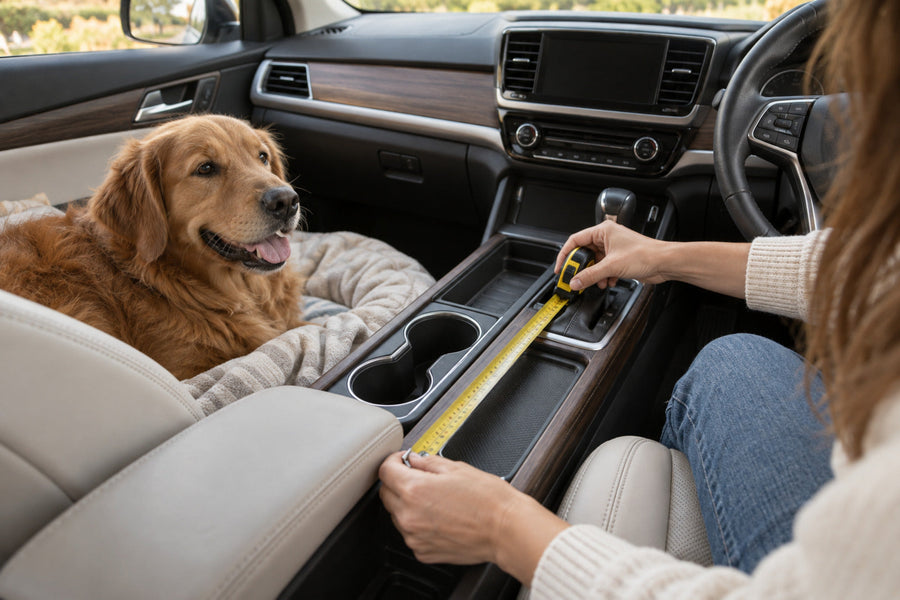
Before buying a carrier, booster bed or other car-travel product, measure the space where it will sit. Check the width between the seat-belt buckles, the depth of the seat and any headrest or attachment points the product requires. Then compare those measurements with the dimensions on the product page. Our guide to measuring your car before buying a pet seat walks through each one.
A few minutes with a tape measure is easier than discovering the fit is wrong after the parcel arrives.
Check your pet before you check the product
The most important specification is not the colour. It is whether the product suits your pet.
Start with your pet’s weight, then consider their body length and how they naturally sit or lie down. For carriers and travel beds, your pet should have enough room to settle without being forced into an awkward position.
Do not estimate from breed alone. Two pets of the same breed can still be very different sizes.
Introduce the travel setup before the trip
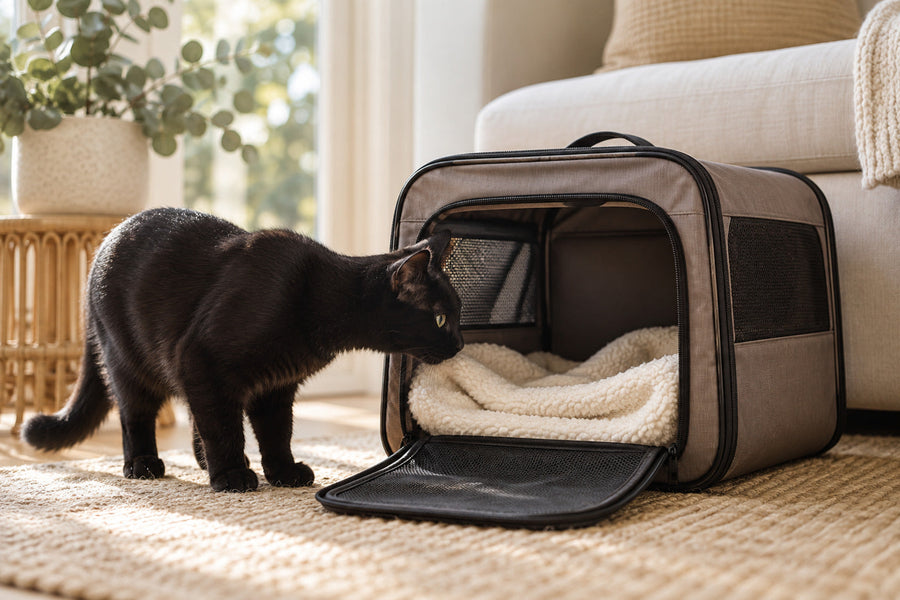
A carrier or travel bed should not first appear five minutes before a long drive. Put it somewhere familiar at home and give your pet time to investigate it without forcing them inside. A familiar blanket or favourite toy can help make the new setup feel less unfamiliar.
- For a carrier, begin with the door open.
- For a travel bed or booster, let your pet sit or rest in it before placing it in the vehicle.
The goal is simple: by the time you travel, the product itself should no longer be the unfamiliar part of the experience.
Make the first drive boring
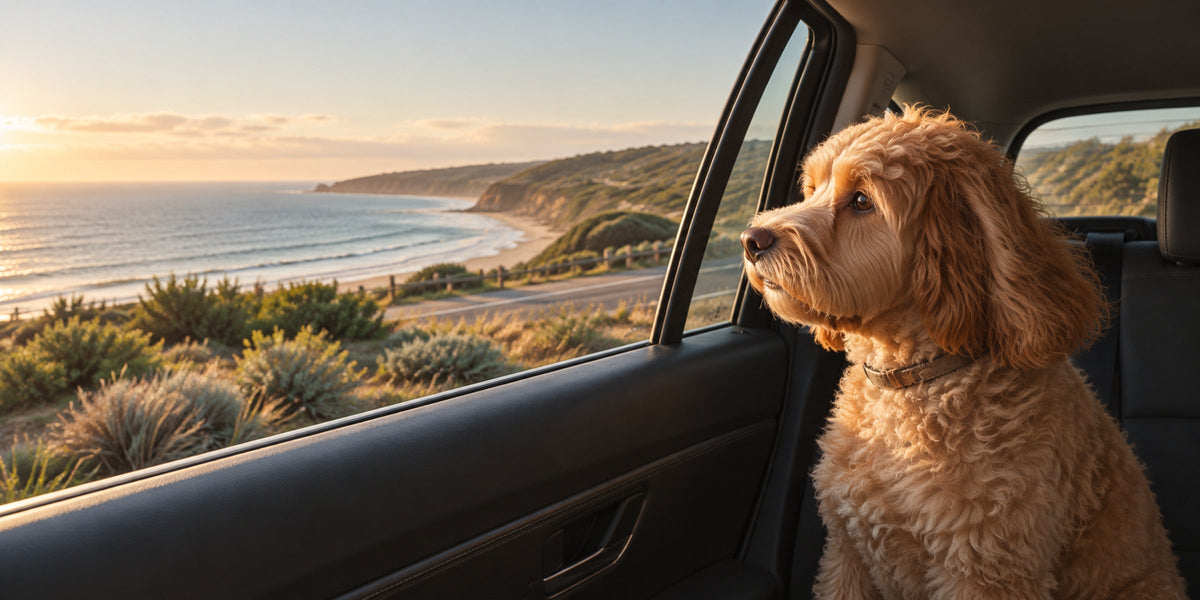
The first trip does not need to be an adventure. A short drive around familiar streets gives you a chance to see how your pet responds without adding hours of travel.
Watch how they sit, turn and settle. Check that the travel setup stays positioned as intended and that nothing is folding, rubbing or shifting in a way you did not expect. If something looks wrong, adjust the setup before attempting a longer journey.
Pack for the drive, not just the destination
Most road-trip packing lists focus on what happens once you arrive. Your pet still has to get there.
- Drinking water you can reach, and a bowl that is easy to use during stops
- Waste bags
- A lead or harness
- A familiar blanket
- Anything your pet routinely needs
For longer journeys, plan your stops before leaving rather than waiting until your pet becomes unsettled. Keep the essentials somewhere you can reach without unpacking the whole car.
Know what the product actually does
A padded booster bed, carrier or travel perch may give your pet a designated place to travel. That does not automatically mean it provides collision protection.
Look at the product specifications rather than relying on the product name alone. Check the pet weight limit, dimensions, attachment method and vehicle fit information before ordering. Every PetNexa travel product that carries or restrains your pet lists its pet weight limit, and we do not make crash or certification claims we cannot back up.
Four things to check before you order
Pet weight limit
Make sure your pet is comfortably within the stated limit. What a pet weight limit actually means explains why.
Dimensions
Compare the product measurements with both your pet and the space available in your vehicle.
Attachment method
Check where and how the product attaches before assuming it will work with your car.
Delivery window
Check when the product is expected to arrive, especially if you are buying it for an upcoming trip. Every PetNexa product page shows its delivery window next to the weight limit, dimensions and fit guidance.
Before the next drive
The best time to work out whether a travel setup suits your pet is before you are packed and ready to leave.
Measure the space. Check your pet. Read the specifications. Introduce the setup at home.
A little preparation can make the first drive much simpler for both of you.